



Calcium Channel
Ca2+ channels; Ca channels
Calcium channel is an ion channel which displays selective permeability to calcium ions. It is sometimes synonymous as voltage-dependent calcium channel, although there are also ligand-gated calcium channels. Voltage-gated calcium (CaV) channels catalyse rapid, highly selective influx of Ca2+ into cells despite a 70-fold higher extracellular concentration of Na+. Some calcium channel blockers have the added benefit of slowing your heart rate, which can further reduce blood pressure, relieve chest pain (angina) and control an irregular heartbeat.
Calcium Channel Isoform Specific Products
All Product Categories
-
Calcium Channel Inhibitors
(585)
View all products
-
Calcium Channel Agonists
(35)
View all products
-
Calcium Channel Antagonists
(210)
View all products
-
Calcium Channel Activators
(86)
View all products
-
Calcium Channel Modulators
(45)
View all products
-
Calcium Channel Chemical
(1)
View all products
-
Calcium Channel Inducers
(11)
View all products
-
Calcium Channel Controls
(10)
View all products
-
Calcium Channel Ligands
(7)
View all products
-
Calcium Channel 관련 제품 (1226)
관련 제품 (1226)

-
Antibodies (29)
-
Related Compound Screening Libraries (1)
-
Calcium Channel Isoform Comparison
-
Fenoverine-d8
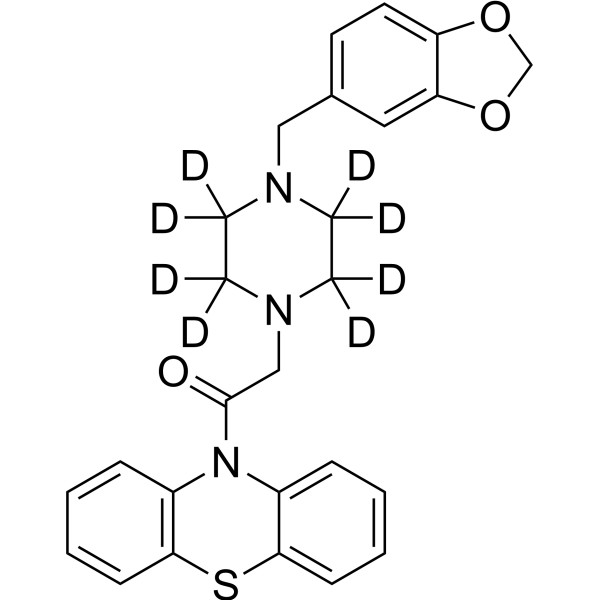 0 ImagesCat. No.: HY-107349SPurity: 98.88%Synonyms: Spasmopriv-d8Fenoverine-d8 is the deuterium labeled Fenoverine. Fenoverine (Spasmopriv) is an orally active and powerful anti-spasmodic drug. Fenoverine reduces calcium ion influx by suppressing voltage dependent calcium channels. Fenoverine has antiemetic, analgesic, and antidiarrheal effects. Fenoverine induces rhabdomyolysis. Fenoverine can be used to study smooth muscle overexcitation related conditions such as gastrointestinal spasms.
-
MONIRO-1
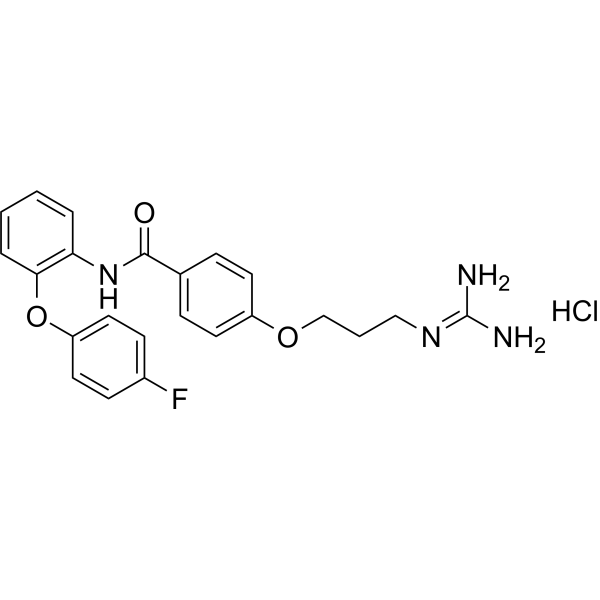 0 ImagesMONIRO-1 is a T-type and N-type calcium channel blocker with IC50 values of 34, 3.3, 1.7 and 7.2 µM against hCav2.2, hCav3.1, hCav3.2 and hCav3.3, respectively. MONIRO-1 has low activity against L-type calcium channels. MONIRO-1 can be used for the study of pain and epilepsy.
-
TAT-EE3
 0 ImagesTAT-EE3 is a neuroprotective peptide which can uncouple TRPM2-NMDARs interaction. TAT-EE3 inhibits TRPM2-induced enhancement of NMDAR surface expression and current amplitude.TAT-EE3 protects neurons against ischemic injury in vitro and in vivo. TAT-EE3can be used for the study of ischemic stroke.
-
Sulcardine sulfate
 0 ImagesCat. No.: HY-19857CAS No.: 343935-61-5Sulcardine (sulfate) is a novel multi-ion channel blocker with activity against Na+, K+ and Ca2+ channels. Sulcardine has antiarrhythmic activity.
-
Ophiopogonin D (Standard)
 0 ImagesOphiopogonin D (Standard) is the analytical standard of Ophiopogonin D. This product is intended for research and analytical applications. Ophiopogonin D can be isolated from the tubers of Ophiopogon japonicus, is a rare naturally occurring C29 steroidal glycoside. Ophiopogonin D is a CYP2J3 inducer that significantly inhibits Ang II induced NF-κB nuclear translocation, IκBα down-regulation, intracellular Ca2+ overload and activation of pro-inflammatory cytokines by increasing the expression of CYP2J2/EETs and PPARα in human umbilical vein endothelial cells (HUVECs). Ophiopogonin D can inhibit isteoclastic differentiation in RAW264.7 cells. Ophiopogonin D has protective effect as an antioxidant in H2O2-induced endothelial injury. Ophiopogonin D blocks ERK signaling cascades. Ophiopogonin D alleviates high-fat diet-induced metabolic syndrome and changes the structure of gut microbiota in mice. Ophiopogonin D has been used against inflammatory, metabolic and cardiovascular diseases.
-
Imperatoxin A
 0 ImagesCat. No.: HY-P3037CAS No.: 172451-37-5
-
Lubeluzole
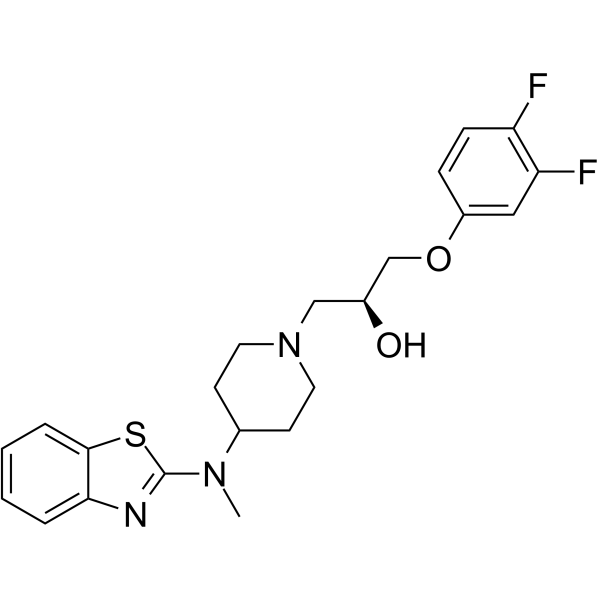 0 ImagesCat. No.: HY-105084CAS No.: 144665-07-6Lubeluzole is the S-isomer of benzothiazole derivative. Lubeluzole can inhibit glutamate release, glutamate-activated NO synthesis and block voltage-gated Sodium Channel and Calcium Channel. Lubeluzole exhibits anti-ischemic and neuroprotective effects. Lubeluzole also shows anti-bacterial and anti-diarrheal potential. Lubeluzole can inhibit cardiac sodium channel and prolong cardiac action potential. Lubeluzole can inhibit cancer cells proliferation and invasion and shows chemosensitizing effect. Lubeluzole can be used for the researches of cancer, infection, neurological and cardiovascular disease such as stroke, infectious diarrhea and ovarian.
-
(2R,3R)-Butane-2,3-diol (Standard)
 0 Images(2R,3R)-Butane-2,3-diol (Standard) is the analytical standard of (2R,3R)-Butane-2,3-diol (HY-W015954). This product is intended for research and analytical applications. (2R,3R)-Butane-2,3-diol is a non-covalent, reversible agonist targeting lanthanum (La3+)-sensitive calcium channels in bacteria (e.g., Escherichia coli) with an EC50 of approximately 25 mM. (2R,3R)-Butane-2,3-diol binds to calcium channel proteins or related complexes, induces channel opening, promotes extracellular calcium influx, and triggers intracellular calcium transients, which may regulate bacterial physiological activities such as growth, metabolism, and signal transduction. (2R,3R)-Butane-2,3-diol mediates bacterial-host cell signaling interactions and affects the metabolic balance of intestinal microorganisms, and can be used to study lactose intolerance and other related diseases.
-
SCH00013
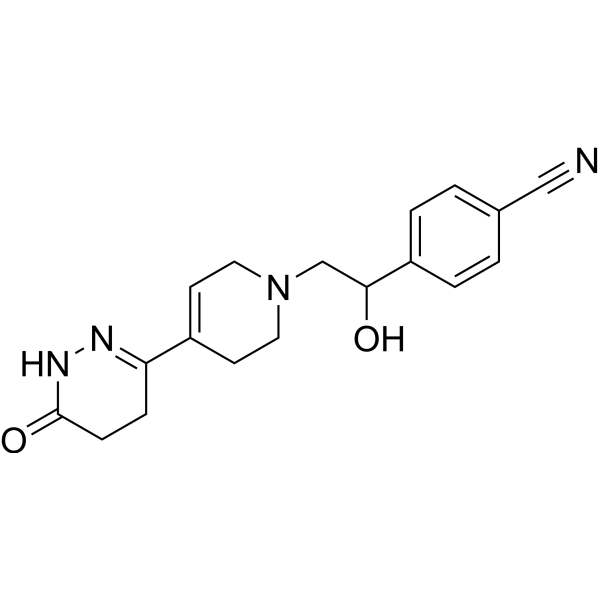 0 ImagesCat. No.: HY-100718CAS No.: 217963-18-3SCH00013 is a cardiotonic that primarily increases the sensitivity of muscle fibers to Ca++.
-
Amlodipine (besylate) (Standard)
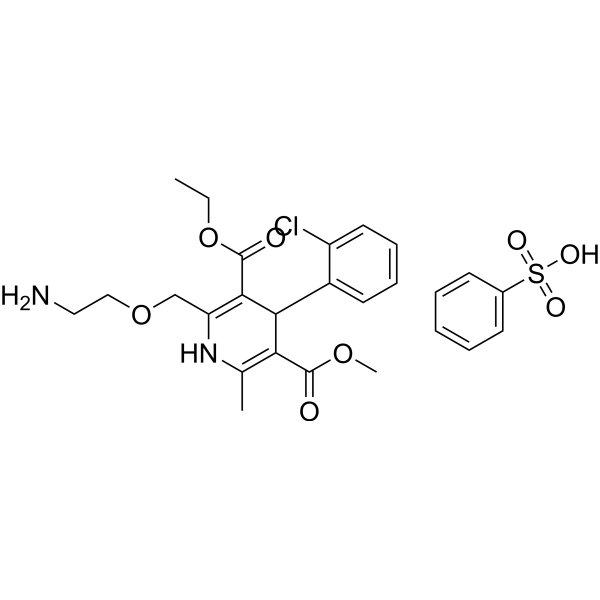 0 ImagesSynonyms: Amlodipine benzenesulfonate (Standard)Amlodipine (besylate) (Standard) is the analytical standard of Amlodipine (besylate). This product is intended for research and analytical applications. Amlodipine besylate (Amlodipine benzenesulfonate), an antianginal agent and an orally active dihydropyridine calcium channel blocker, works by blocking the voltage-dependent L-type calcium channels, thereby inhibiting the initial influx of calcium. Amlodipine besylate can be used for the research of high blood pressure and cancer.
-
CAD204520 dihydrochloride
 0 ImagesCAD204520 dihydrochloride, a SERCA inhibitor (IC50 = 0.34 μM), targets mutated over wild type NOTCH1 proteins in T-cell acute lymphoblastic leukemia (T-ALL) and mantle cell lymphoma (MCL). CAD204520 dihydrochloride can be used for T-ALL and MCL research.
-
Rp-8-Br-cGMPS sodium
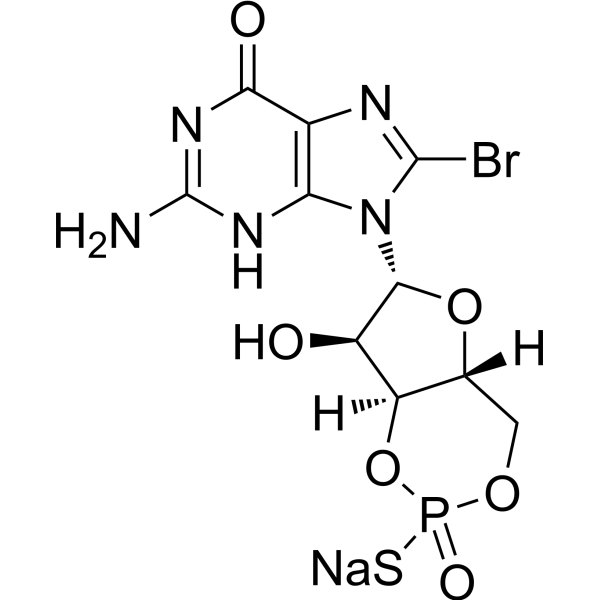 0 ImagesSynonyms: Rp-8-bromo-Cyclic GMPS sodium
-
Cerebrocrast
 0 ImagesCat. No.: HY-106808CAS No.: 118790-71-9Synonyms: IOS-1.1212Cerebrocrast (IOS-1.1212) is a 1,4-dihydropyridine (DHP) derivative. Cerebrocrast has a high affinity for the membrane lipid bilayer and it can easily penetrate the blood-brain barrier and incorporate into the plasma and organelle membranes, including those of mitochondria. Cerebrocrast promotes the cotransport of H+ and Cl- in rat liver mitochondria. Cerebrocrast also exhibits neuroprotective and cognition enhancer properties.
-
(S)-Nicardipine
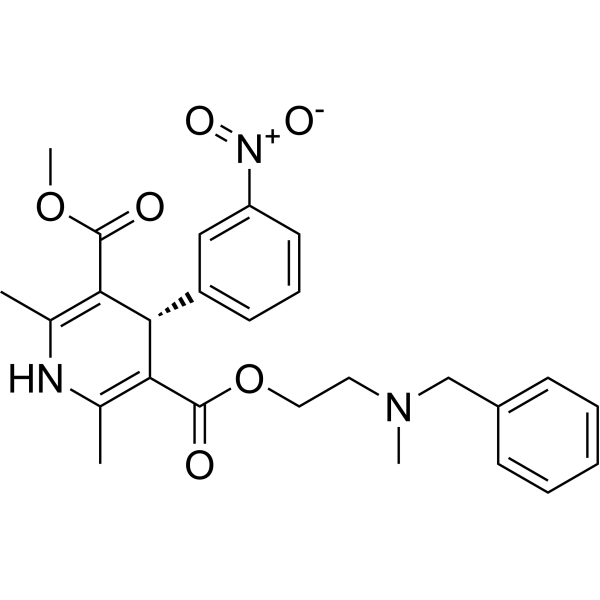 0 ImagesSynonyms: (S)-YC-93 free base(S)-Nicardipine ((S)-YC-93 free base) is the less active S enantiomer of Nicardipine. Nicardipine is a calcium channel blocker with an IC50 of 1 μM for blocking cardiac calcium channels. Nicardipine acts as an agent for chronic stable angina and for controlling blood pressure.
-
Benzocaine (Standard)
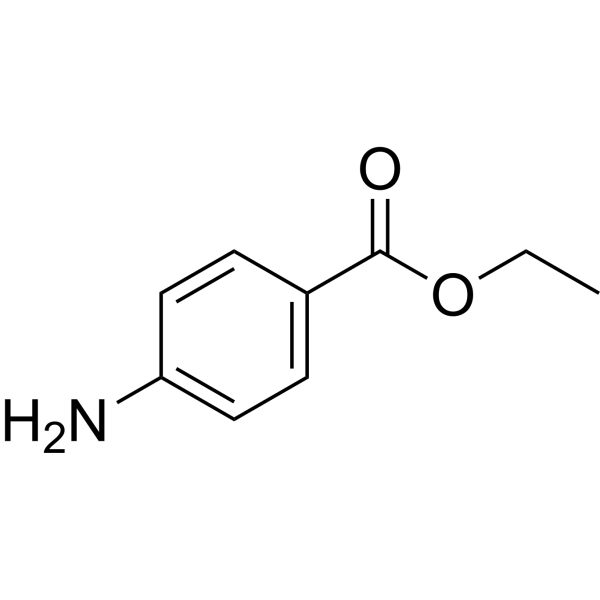 0 ImagesBenzocaine (Standard) is the analytical standard of Benzocaine (HY-Y0258). This product is intended for research and analytical applications. Benzocaine is an orally active local anesthetic. Benzocaine non-competitively inhibits the binding of Ca-ATPase to Ca2+, with an IC50 of 47.1 mM. Benzocaine exerts anesthetic effects by blocking voltage-gated sodium channels. Benzocaine induces methemoglobinemia in various experimental animals.
-
Terodiline hydrochloride
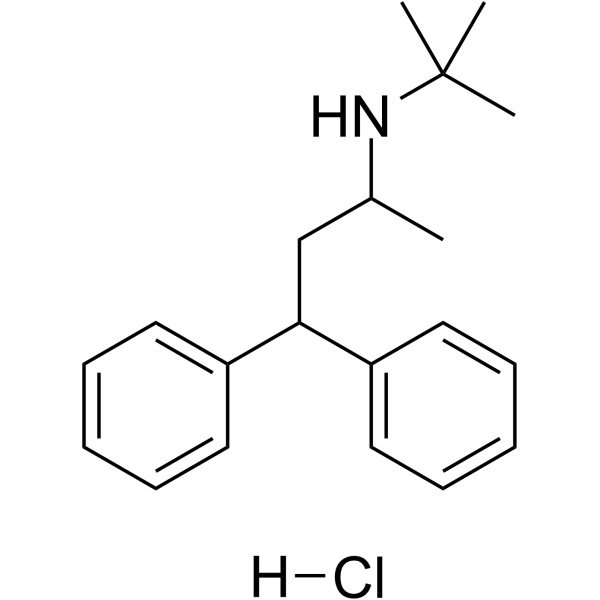 0 ImagesTerodiline hydrochloride is an M1-selective muscarinic receptor (mAChR) antagonist with Kbs of 15, 160, 280, and 198 nM in rabbit vas deferens (M1), atria (M2), bladder (M3) and ileal muscle (M3), respectively. Terodiline hydrochloride also is a Ca2+ blocker. Terodiline hydrochloride acts as a treatment for urinary frequency and urge incontinence.
-
5-Hydroxyindole (Standard)
 0 Images5-Hydroxyindole (Standard) is the analytical standard of 5-Hydroxyindole (HY-W001160). This product is intended for research and analytical applications. 5-Hydroxyindole is an orally active hydroxylated indole and tryptophan metabolite. 5-Hydroxyindole activates α7 nicotinic acetylcholine receptors and acts on intestinal L-type calcium channels. 5-Hydroxyindole slows down the desensitization of 5-HT3 receptor-mediated ion currents in cells. 5-Hydroxyindole causes convulsions and loss of consciousness. 5-Hydroxyindole is used in the study of neuroblastoma, schizophrenia, and diseases related to intestinal motility disorders.
-
Gallopamil
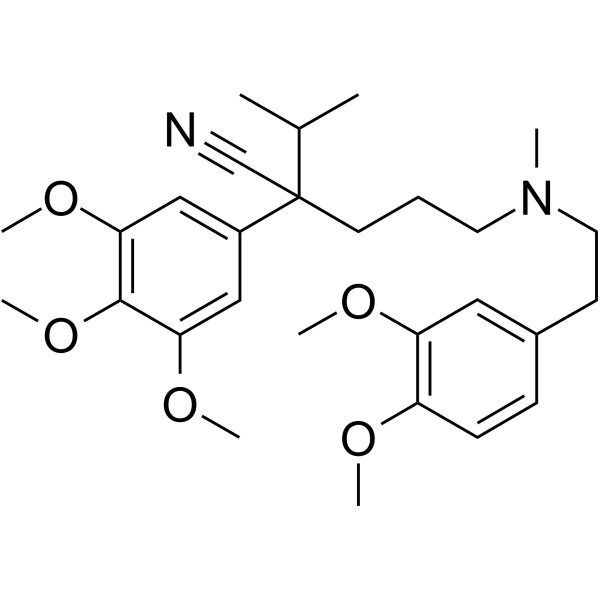 0 ImagesCat. No.: HY-14276CAS No.: 16662-47-8Synonyms: MethoxyverapamilGallopamil (Methoxyverapamil), a methoxy derivative of Verapamil, is a phenylalkylamine calcium antagonist. Gallopamil inhibits acid secretion in a concentration-dependent manner with an IC50 of 10.9 μM. Gallopamil is a potent antiarrhythmic and vasodilator agent.
-
Isradipine-d3
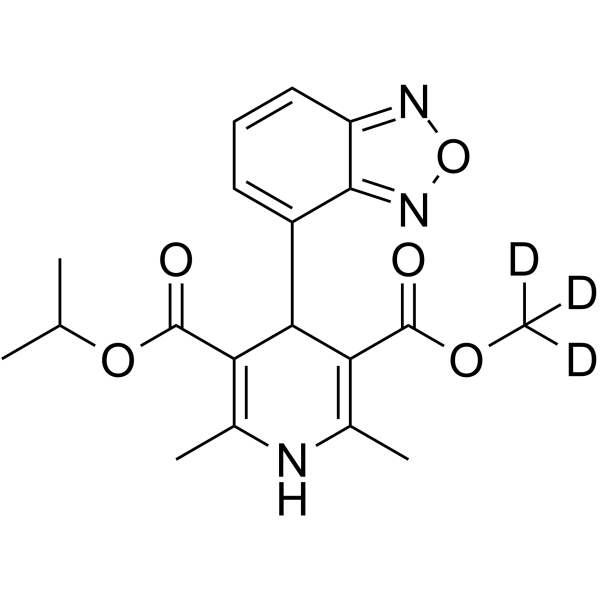 0 ImagesCat. No.: HY-B0233SCAS No.: 1189959-59-8Isradipine-d3 (PN 200-110-d3) is the deuterium labeled Isradipine. Isradipine (PN 200-110) is an orally active L-type calcium channel blocker. Isradipine, as a powerful peripheral vasodilator, is a dihydropyridine calcium antagonist with selective actions on the heart as well as the peripheral circulation. Isradipine is a potentially viable neuroprotective agent for Parkinson's disease.
-
Calamenene
 0 ImagesCat. No.: HY-N10116ACAS No.: 483-77-2Calamenene is a sesquiterpene compound. Calamenene promotes dendritic cell maturation, upregulates CD1a, CD80, CD83, CD86, HLA-DR and CCR7 on the cell surface, reduces endocytic activity, enhances T cell-stimulating capacity, drives Th1 polarization through the secretion of IL-12, induces IFN-γ production, decreases IL-4 generation, and triggers intracellular Ca2+ mobilization as well as dendritic cell migration towards MIP-3β. Calamenene exerts bacteriostatic and bactericidal growth-inhibitory effects against pathogenic *Vibrio harveyi*. Calamenene can be used in studies related to cancer and bacterial infections.




